Coconut Oil for Hair and Skin: The Complete Guide
Not all coconut oil products are equal. Here is the science behind why it works, when it does not, and how to use it effectively.
Coconut oil is one of the most effective natural moisturizing ingredients available, but most people are using it wrong. Applied raw from a jar, it can clog pores and leave a greasy film. Formulated correctly in a water-based product, it penetrates deeply and delivers lasting nourishment without any of the drawbacks. Understanding the difference is the key to getting real benefits.
What Makes Coconut Oil Different at a Molecular Level
Coconut oil is composed primarily of medium-chain fatty acids, with lauric acid being the dominant component at roughly 50% of its total fatty acid content. This matters because medium-chain fatty acids have a smaller molecular size than the long-chain fatty acids found in most other plant oils.
This smaller size allows coconut oil to penetrate the hair shaft and skin barrier in ways that larger oils cannot. Argan oil, jojoba oil, and olive oil primarily sit on the surface, creating a temporary coating. Coconut oil actually enters the structure of your hair and skin, providing nourishment from the inside rather than just the outside.
Lauric acid also has natural antimicrobial properties. It disrupts the lipid membranes of bacteria, making coconut oil useful for preventing skin infections, reducing acne-causing bacteria, and keeping the scalp healthy.
Benefits for Your Hair
The primary benefit of coconut oil for hair is its ability to reduce protein loss. Hair is made of a protein called keratin. Every time you wash, style, or expose your hair to heat or sun, small amounts of protein are stripped away. Over time, this leads to dry, brittle, dull hair.
Research published in the Journal of Cosmetic Science found that coconut oil was the only oil tested (among mineral oil, sunflower oil, and others) that significantly reduced protein loss in both damaged and undamaged hair. The study attributed this to coconut oil's ability to penetrate the hair shaft and bind with the internal protein structure.
For your scalp, coconut oil provides moisture that prevents the dryness responsible for flaking and itching. The antimicrobial properties help maintain a healthy scalp environment, which supports healthier hair growth over time.
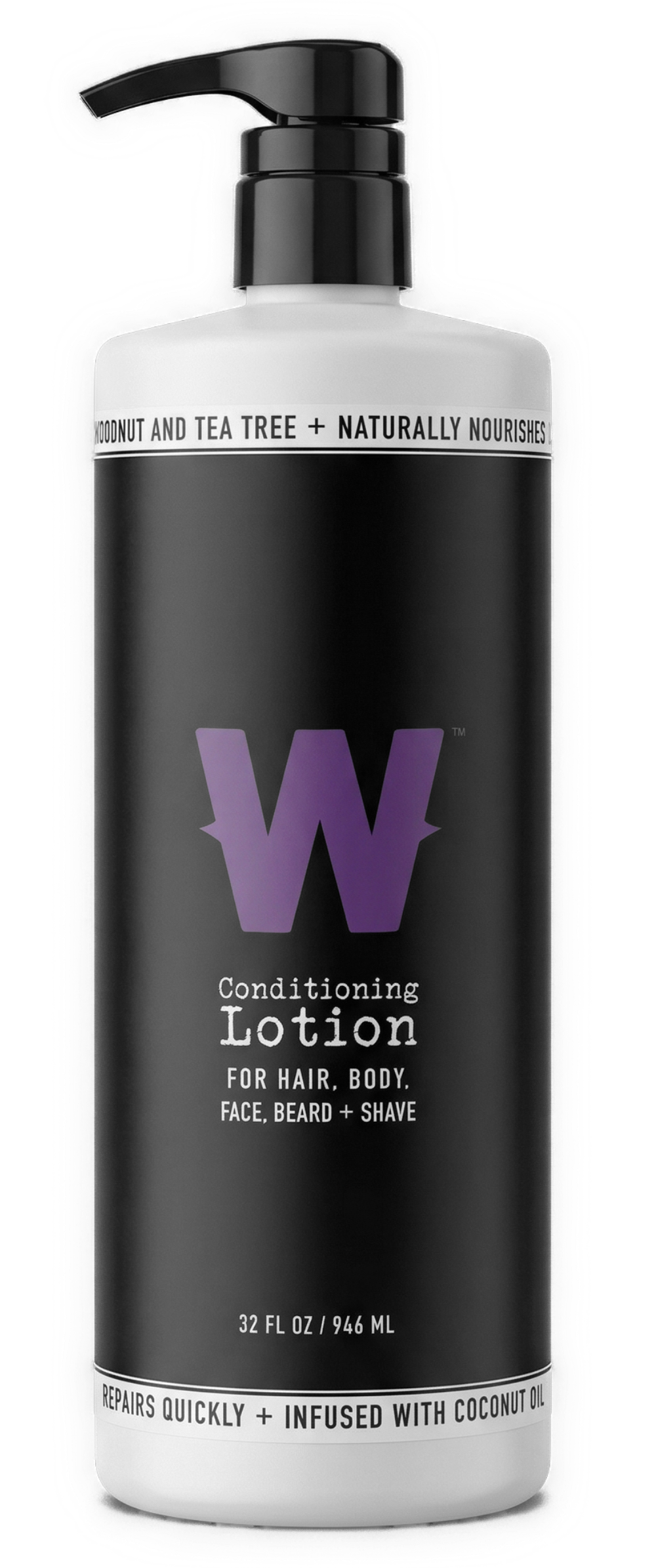
Hair, body, face, beard, and shave. One bottle replaces them all.
Benefits for Your Skin
On skin, coconut oil acts as an emollient, filling in the tiny gaps between skin cells to create a smoother, more even surface. It strengthens the skin's natural lipid barrier, which is the thin protective layer that keeps moisture in and irritants out.
A compromised lipid barrier leads to dry, flaky skin that is more vulnerable to redness, irritation, and infection. Coconut oil restores this barrier while providing deep moisture that lasts longer than surface-level hydration from synthetic moisturizers.
The anti-inflammatory properties of coconut oil also make it effective for calming irritated skin, whether from shaving, sun exposure, or dry environmental conditions.
The Pore-Clogging Question
The most common concern about coconut oil is whether it clogs pores. The answer depends entirely on how it is delivered. Raw, unrefined coconut oil applied directly to the face has a comedogenic rating of 4 out of 5, meaning it is likely to clog pores for many skin types. This is because in its raw form, the oil is too dense and heavy for the delicate pores on your face.
However, when coconut oil is emulsified in a water-based formula, the oil is broken into microscopic particles that absorb into the skin without blocking pores. The concentration is also much lower than raw application, delivering the benefits without the density. This is why a well-formulated conditioning lotion with coconut oil can be used safely on the face, while scooping raw coconut oil onto your cheeks would be a mistake.
How to Get the Most Out of Coconut Oil
For hair, apply a coconut oil-based product to damp hair after washing. The moisture in your hair helps the oil distribute evenly and absorb more effectively. Focus on the mid-lengths and ends where damage concentrates. For the scalp, massage a small amount in with your fingertips to stimulate blood flow and deliver moisture.
For skin, apply after showering when your skin is slightly damp. Your pores are open from the warm water, and the residual moisture helps the product absorb faster. A water-based formula will absorb in seconds, not minutes, so you can get dressed immediately without worrying about transfer.
For beard care, work the product from the roots of your facial hair down to the tips, then massage into the skin underneath. Coconut oil softens beard hair while the skin beneath gets the antibacterial and moisturizing benefits.
Raw Coconut Oil Versus Formulated Products
Raw coconut oil has its place. It is excellent for cooking, and it can work well as a hair mask left on for 20 to 30 minutes before washing out. But for daily-use skincare and haircare, a formulated product is vastly superior.
A well-formulated product combines coconut oil with complementary ingredients like tea tree oil for antibacterial protection, proper emulsifiers for even distribution, and a water base for fast absorption. The result is a product that delivers coconut oil's benefits in a form your skin and hair can actually use every day, without the mess, greasiness, or pore-clogging potential of raw application.
Frequently Asked Questions
Get Grooming Tips Delivered.
No spam. Just useful stuff.