Tea Tree Oil Explained: What It Does and What It Does Not
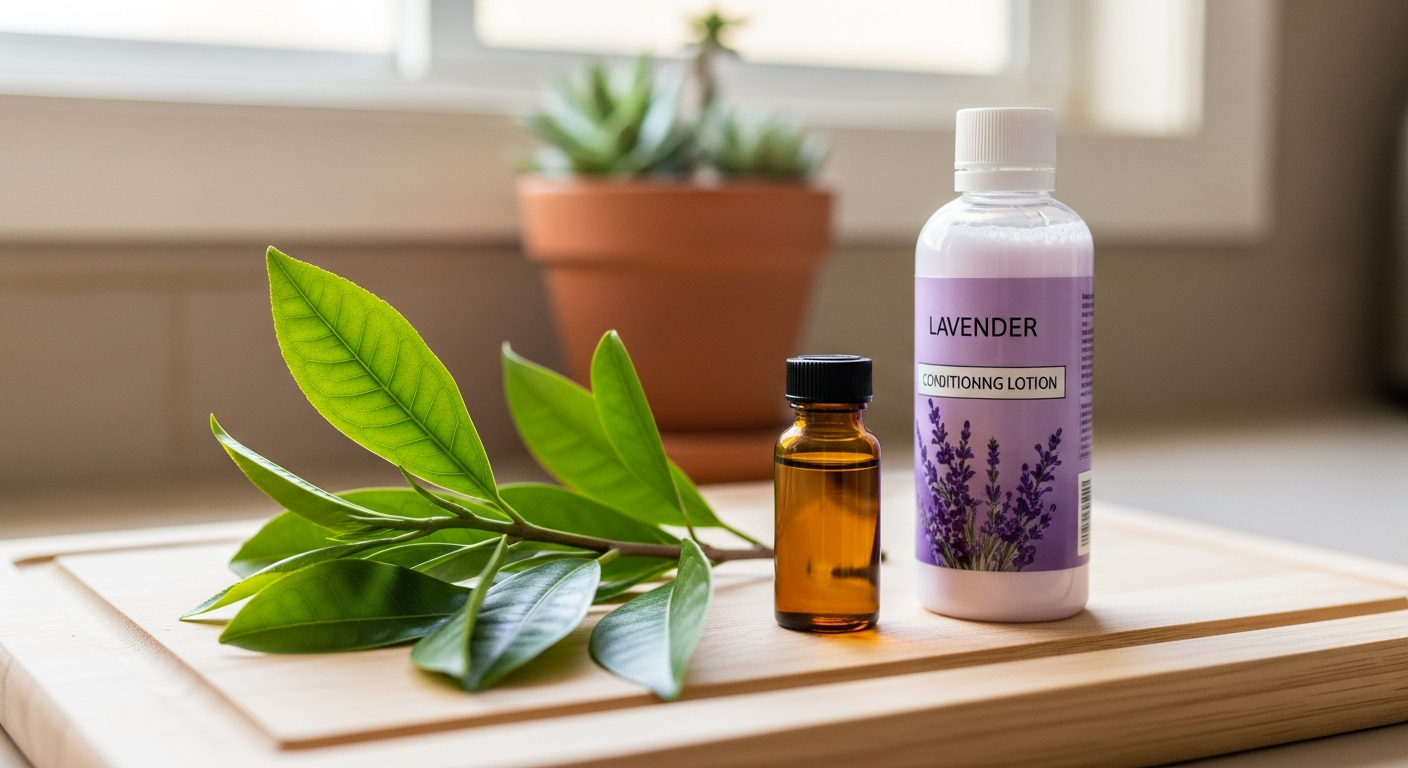
Tea tree oil has earned a reputation as a multi-purpose skin ingredient. Here is what the science actually supports.
Tea tree oil, derived from the leaves of the Australian Melaleuca alternifolia tree, has become one of the most common natural ingredients in modern skincare and haircare. It earned its place through a combination of traditional use and modern research, but it is also frequently misunderstood. Knowing what it actually does, and what it does not, helps you use it effectively.
What Tea Tree Oil Does
Tea tree oil contains a compound called terpinen-4-ol, which is the primary active ingredient responsible for its antimicrobial properties. Research has consistently shown terpinen-4-ol to be effective against a broad range of bacteria, fungi, and some viruses.
On the scalp, this antimicrobial activity addresses Malassezia, the yeast responsible for true dandruff. On the skin, it can help reduce acne-causing bacteria and prevent folliculitis after shaving. In a beard, it keeps the warm, sometimes humid environment from becoming a microbial breeding ground.
Tea tree oil also has anti-inflammatory properties that calm redness and irritation. This makes it useful for post-shave application, for soothing scalp irritation, and for reducing the inflammation associated with ingrown hairs.
What Tea Tree Oil Does Not Do
Tea tree oil is not a miracle ingredient. It does not regrow hair, despite some marketing claims. Research showing scalp benefits is about hair retention through a healthier scalp environment, not about activating dormant follicles.
It does not work as a sunscreen, a moisturizer on its own, or a treatment for serious skin conditions like cystic acne or severe eczema. It is one tool in a broader formulation, not a standalone treatment for everything.
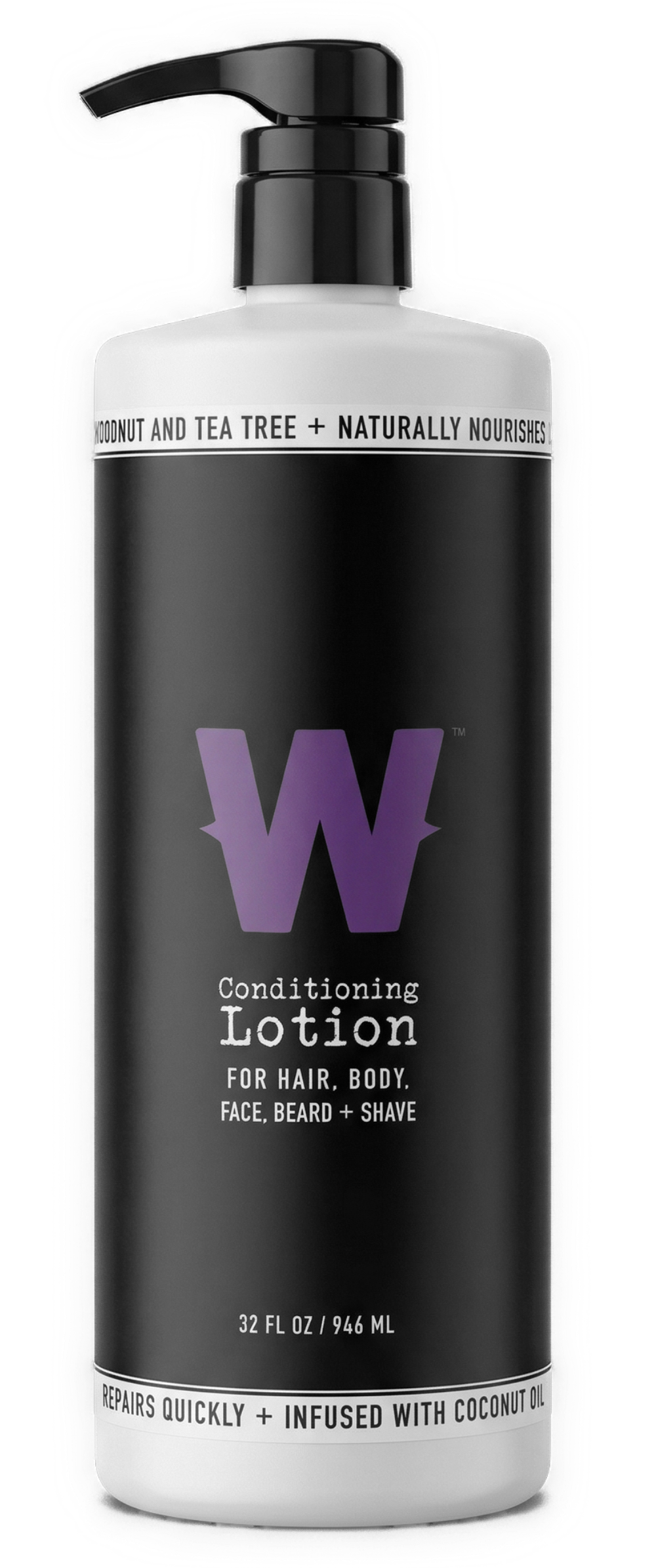
Hair, body, face, beard, and shave. One bottle replaces them all.
Why Concentration Matters
Pure tea tree oil applied directly to skin is too concentrated for daily use and can cause irritation, contact dermatitis, or even allergic reactions. The formulation matters as much as the ingredient itself.
In a properly formulated conditioning lotion, the tea tree oil is diluted to a percentage that delivers the antimicrobial and anti-inflammatory benefits without overwhelming the skin. The water-based delivery also helps distribute it evenly across application area, which raw oil cannot do.
Pairing With Coconut Oil
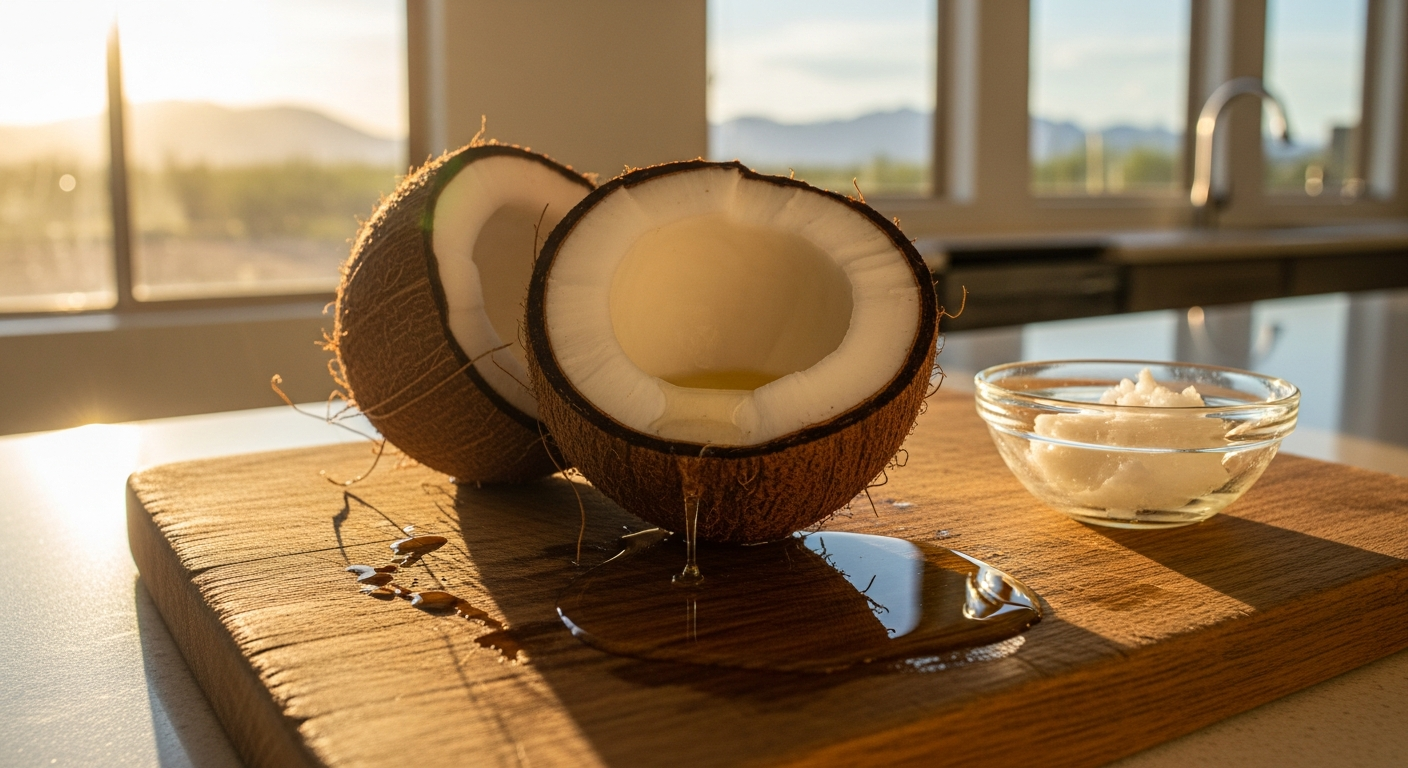
Tea tree oil and coconut oil work particularly well together. The coconut oil provides moisture and creates a delivery vehicle that helps tea tree oil penetrate evenly. Coconut oil's own antimicrobial properties from lauric acid complement tea tree oil's mechanism, providing broader coverage against different microorganisms.
Together, they address the two biggest causes of skin and scalp irritation: dryness and microbial imbalance. Either one alone is helpful. Both together is significantly more effective.
Sensitivity and Patch Testing
Tea tree oil is generally well-tolerated, but a small percentage of people are sensitive to it. If you have never used a tea tree-containing product before, apply a small amount to the inside of your forearm and wait 24 hours. If no irritation appears, the product is safe for broader use.
If you have a known allergy to plants in the Myrtaceae family (which includes eucalyptus, allspice, and clove), you may want to skip tea tree oil products entirely and look for alternatives.
Why MUG Chose Tea Tree
When the Barbetologists at MUG developed the conditioning lotion, tea tree oil was selected over synthetic alternatives because it provides daily-use antimicrobial protection without the irritation profile of harsher actives. After years of formulation testing across eight Phoenix salons, the combination of tea tree oil and coconut oil emerged as the most consistently effective.
When to Use It
Daily use in a properly formulated product is fine for most people. The concentration is calibrated for ongoing application. There is no need to cycle off, no need to limit use to certain seasons, and no need to wash it off after a specific time.
Frequently Asked Questions
Get Grooming Tips Delivered.
No spam. Just useful stuff.